
Match Analysis
How to Analyse a Football Match
Good match analysis explains why a result happened, not just what happened. Start with context, identify each team's shape and plan, follow the phases of play, then check your view against the key moments and statistics.
1. Context before kick-off
- Competition and stakes: a league match, a cup tie or the second leg of a knockout round changes how teams approach the game.
- Recent form and fixture load: see how to read team form.
- Availability: injuries, suspensions and rotation after midweek matches.
- Venue: home or away, and conditions such as heat or a heavy pitch.
2. Shapes and plans
Note each team's starting formation, then watch how it changes with and without the ball. Ask: who provides width? Where does each team try to win the ball back? Which player links defence and attack?
3. Phases of play
| Phase | Questions to ask |
|---|---|
| Build-up | How does the team move the ball out from the back? Short passes or direct balls? |
| Chance creation | Where do chances come from — crosses, through balls, individual dribbles? |
| Defending | High press, mid block or low block? How compact is the team? |
| Transitions | What happens in the seconds after possession changes hands? |
4. Key moments
Goals, big chances, red cards, injuries and tactical substitutions often change a match. Note when they happen and how each team responds. A goal early in the match changes the game state — and every statistic that follows.
5. Set pieces
Corners, free kicks and penalties account for a meaningful share of goals. Note how teams defend them — zonal marking, man-marking or a mix — and whether routines look rehearsed.
6. Check the statistics
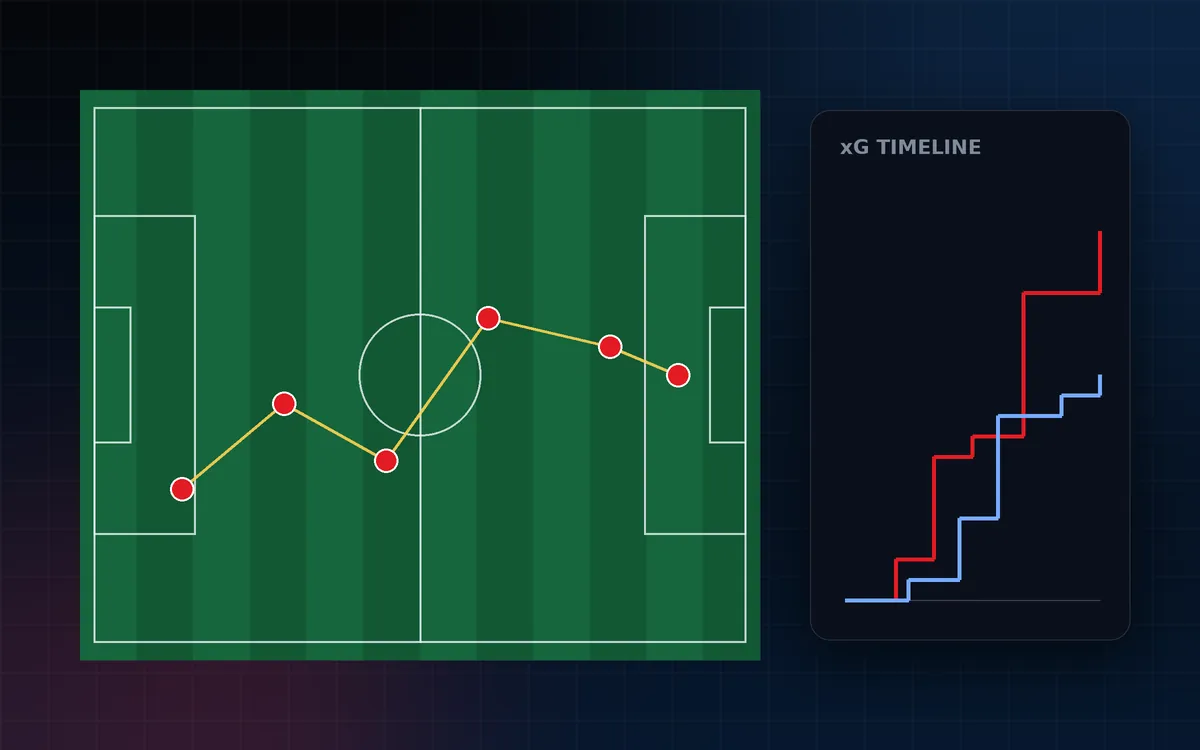
Use statistics to test what you saw. Did the team you thought dominated actually create better chances by xG? Did possession translate into shots? See football statistics explained
Match analysis checklist
- Write down the context and each team's likely plan.
- Note starting shapes and how they change.
- Track the key moments with the minute they happened.
- Compare your impressions with the statistics.
- Explain the result in two or three sentences — without claiming it was inevitable.